A Story of Two Plants

A Story of Two Plants
She tells her story in a practical way, almost as if she is still trying to make sense of it while living it.
She grew up in Accra, Ghana, raised by a mother who believed in education strongly enough to sacrifice for it again and again. Money was not easy, but her mother kept finding ways forward. She sold clothes and other belongings to pay school fees. For the girl she was then, school was never just school. It was dignity, a direction, and proof that life could become larger than its circumstances.
Even as a child, she had a habit of asking W H Y. If an adult told her to do something, she wanted the reason behind it. She liked understanding both sides of a story. She liked details. She liked clarity. She once imagined becoming a lawyer, someone who could listen, argue, and defend. Later she studied journalism, but the deeper instinct remained the same: she was always someone trying to understand how the world worked.
When she moved to the Netherlands, she carried that same sense of possibility with her. Migration, from a distance, looked like a path toward a better life. It looked like movement, progress, and the chance to continue what had already begun. But arrival brought a different reality. The first journey itself stayed with her: the pain in her ears on the plane, the confusion of landing in a new country, the feeling that the life she had imagined and the life she entered were not the same.
The sharpest break in her story came when she was offered a chance to continue school in the Netherlands. She remembers how happy she was. Then she was told she would not go. She needed to work instead.

Years later, that moment still sits at the center of her memory. It is the point she returns to when she talks about what changed. “It makes me sad,” she said. “It’s like opportunity that has been taken away, had been snatched away.”
After that came the kind of life many people do not see when they talk loosely about migration. There was work, but not the work she had imagined for herself. There were cleaning jobs and hotel jobs. There was survival. At one point, she moved into a supervisory role, a reminder that her intelligence and discipline had not disappeared. But that did not erase the larger feeling that her life had narrowed.
She spoke about how painful it became to compare herself to friends from earlier years, especially those who seemed to be moving easily into careers and identities they had chosen. Eventually, she stepped away from social media. It hurt too much to watch other people become what they had planned while she was still trying to explain what had happened to her own plans.
“Most of us immigrants in this country, we don’t do the jobs that we love,” she said. “We are doing it just for survival.”
Life kept moving, whether she was ready or not. She married. She became a mother. Her two daughters were born in Amsterdam. Then later, the marriage ended, though the children’s father remains part of their lives. She speaks about that part of her life without drama and without wanting to linger in blame. She says she does not want to hold grudges. She wants to keep moving.
Now, much of her energy goes into creating a better environment for her daughters. She recently moved to a new area because she wanted a different future around them, a different sense of possibility. On one of her daughter’s first days at a new school, they arrived early and waited as the other children began to enter. Her daughter looked around, noticing the differences in skin color and hair, and asked, “Mum, who are these people?”
The mother answered simply: people just like you.

It is a small moment, but it reveals a great deal. She is not only raising children. She is helping them learn how to belong in places that may not immediately feel familiar. She is also trying to protect them from the quiet limitations she feels shaped parts of her own life.
Her present life is still unfinished in visible ways. At the time of the interview, the new home was not fully settled. The internet had not worked properly. She was still trying to get basics in place, including a table where the family could sit and eat together. But beneath those practical details was something steadier: a decision not to give up on herself.
She is returning to school. She volunteers, helping others understand forms, letters, payments, and public systems. It is work that fits her naturally. The girl who always wanted more explanation has become a woman others turn to for help making sense of bureaucracy.
And slowly, she has found a way to reinterpret her own life as well.
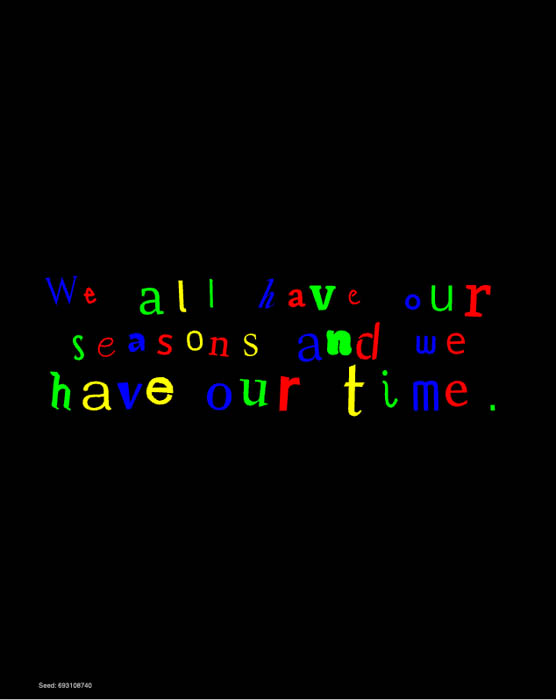
For an assignment, she once took a photo of two plants. They were the same kind, but one had already bloomed while the other had not. She looked at them and saw something she needed to hear. “We all have our seasons and we have our time,” she said.
In that thought, there is grief, but there is also release. Her life did not unfold when she expected it to. Opportunities were delayed. Some were lost. Responsibilities arrived before she felt ready. But delay, she has begun to believe, is not the same as ending.
So she tells her daughters to speak kindly to themselves. She tells them they are beautiful, capable, and strong. She tells them to keep going.
And, quietly, she is learning to tell herself the same thing.