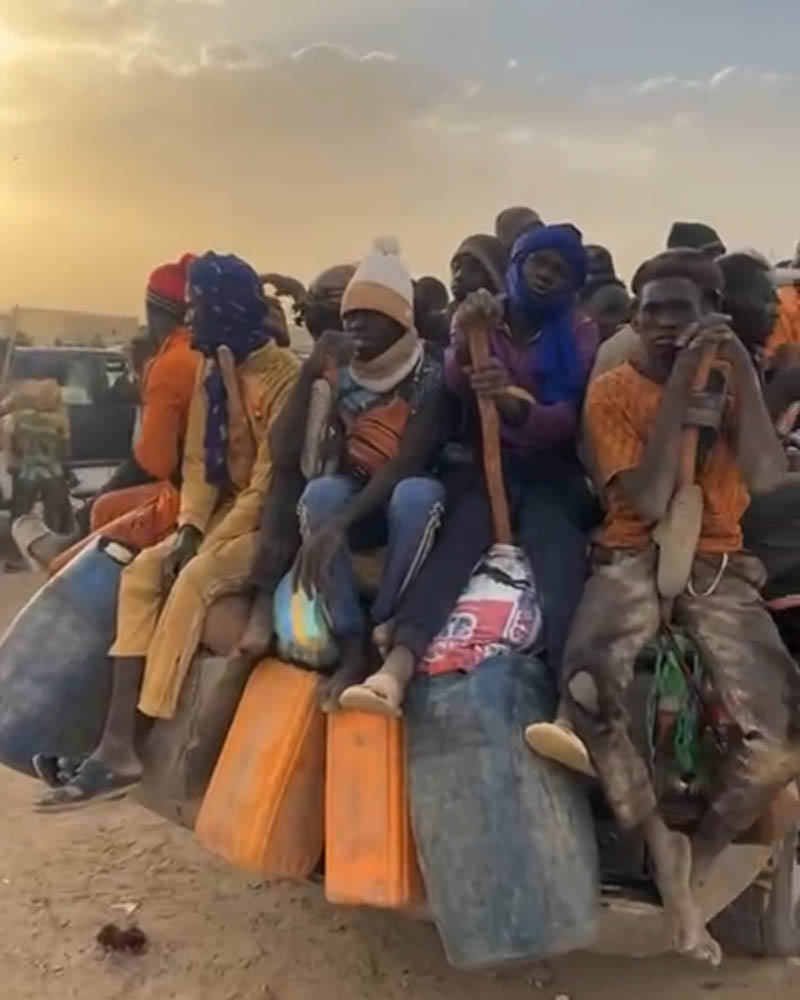
When people think about migration, they often imagine numbers, policies, or news headlines. They do not imagine a simple plastic bag. But for me, this bag represents my life, my journey, and the truth behind what it means to leave home. It is the object that carried everything I owned when I left The Gambia, and today it carries the story I want others to understand.
Before coming to Europe, my life in The Gambia was shaped by economic hardship. Finding work was difficult, and even when work was available, it was often not enough to survive or support a family. Many young people like me faced the same situation. We had dreams, but very few opportunities to achieve them. This is something that is often misunderstood. From the outside, migration can look like a choice, but for many of us, it feels more like a necessity. Every day, I watched people struggle to pay for food, education, and healthcare. Families depended on one another to survive, and many young people felt pressure to leave in order to support those they loved.
Growing up, I dreamed about building a future where I could live with dignity and stability. I wanted to work, continue learning, and help my family financially. However, the reality around me made these dreams difficult to achieve. Opportunities were limited, and many people felt trapped in cycles of poverty. Some people accepted this situation, but others believed migration was the only chance to create a better life. Hearing stories from people who had traveled abroad gave me hope. Even though their journeys were difficult, they inspired me to believe that another future might be possible.
In society, migrants are often described using categories like, illegal, undocumented, or economic migrant.These labels create meaning, but they also create power. They shape how people see us before they even hear our stories. According to what we learned in class, social reality is constructed through discourse. This means that the way migrants are talked about in media and politics influences how they are treated in real life. My story is not just about movement from one place to another; it is also about how my identity was shaped by these categories.
The day I decided to leave, I packed my belongings into a plastic bag. It was not strong, and I knew it could break at any moment, but it was all I had. Inside it, I placed a few clothes, some important documents, and small personal items. But what I could not pack were my emotions fear, hope, and uncertainty. Leaving my family was one of the most painful moments of my life. I did not know when I would see them again, but I knew I had to try. Saying goodbye was extremely emotional. My family encouraged me to stay strong, but I could see the sadness in their faces. At that moment, I realized migration is not only difficult for the person leaving, but also for the family left behind.
The journey was long and full of challenges. Traveling across countries without security or stability is something that changes you. There were moments of hunger, moments of fear, and moments when I questioned my decision. Along the way, I met many other migrants, each with their own story. Some were escaping conflict, others were escaping poverty, but all of us were searching for a better life. We shared food when we had little, encouraged each other during difficult times, and created temporary friendships based on survival. Even though we came from different countries and cultures, we understood each other’s pain.
There were nights when I could not sleep because I was worried about what would happen next. I often thought about my family and wondered whether I had made the right decision. The uncertainty of the journey was mentally exhausting. Sometimes, we did not know where we would sleep or whether we would have enough food for the next day. Despite these difficulties, I continued moving forward because I believed giving up would mean losing the chance for a better future.
During this journey, I began to understand something important: not all stories are told equally. In class, we learned about how knowledge is produced. The scholar Michel-Rolph Trouillot explains that history is created in different stages: when facts are created, when they are recorded, when they are told, and when they are remembered. Many migrant stories are lost in these stages. Some experiences are never recorded. Some voices are never heard. This means that what people think they know about migration is often incomplete.
My plastic bag is part of what Trouillot would call fact creation. It is evidence of my journey. But if I do not tell my story, then that evidence remains silent. This is why this assignment is important to me. It gives me the chance to turn my experience into a narrative, to make my story part of knowledge. Too often, migrants are spoken about without being given the opportunity to speak for themselves. By sharing my own experience, I can challenge stereotypes and help others understand the human side of migration.
When I finally arrived in Europe, I realized that the journey was not over. In many ways, it was just beginning. Life in Europe brought new challenges. Language barriers, cultural differences, and the process of integration were not easy. This connects to the idea of socialization that we studied. Socialization is about learning the norms and values of a society in order to belong. As a migrant, this process is more complex. You must learn a new system while still holding on to your identity.
At first, adapting to a new environment was difficult. Everything felt unfamiliar, from the language people spoke to the way society functioned. I sometimes felt isolated because I could not fully express myself or communicate easily. There were moments when I missed home deeply. I missed my family, the food, the culture, and the feeling of belonging. Even simple daily activities could feel stressful because I was trying to understand a completely new system.
Sometimes, I felt invisible. Other times, I felt judged. People saw me as a migrant before they saw me as a person. This reflects another idea from class: information is not the same as truth. What people hear about migrants is often shaped by politics and media, not by real experiences. These representations create power structures that affect our lives. They influence policies, opportunities, and how we are treated in everyday interactions. When people only hear negative stories about migrants, they begin to see all migrants through the same lens. This can lead to discrimination and misunderstanding.
At the same time, I also experienced moments of kindness and support. Not everyone sees migrants through negative stereotypes. Some people listen, understand, and try to help. Teachers, volunteers, and community members sometimes showed me compassion when I needed it most. These moments reminded me why I started this journey. They gave me hope that change is possible. They also showed me that human connection can exist even between people with very different backgrounds.
Education became especially important for me after arriving in Europe. I realized that learning could help me build a future and become more independent. School also helped me understand society better and communicate with others. At the same time, education gave me confidence. It reminded me that I was more than the labels people placed on me. I was a student, a worker, a son, and a human being with goals and dreams.
Looking back, my plastic bag is no longer just an object. It has become a symbol. It represents survival, resilience, and the search for dignity. It also represents the gap between how migration is talked about and how it is actually lived. For some people, a plastic bag may seem worthless or ordinary. For me, it represents sacrifice, memory, and hope. Every time I look at it, I remember the risks I took and the strength it required to continue moving forward.
This is where the idea of “truth and power” becomes important. As we learned, information can be constructed, and not all information reflects reality. By telling my story, I am challenging the dominant narratives about migrants. I am showing that behind every label is a human being with a history, a struggle, and a dream. Stories like mine remind people that migration is not only a political issue but also a deeply personal experience.
Migration is not just about moving from one country to another. It is about navigating systems of power, identity, and knowledge. It is about being categorized, sometimes misunderstood, and often unheard. But it is also about strength, courage, and hope. Migrants carry more than physical belongings when they travel. They carry memories, responsibilities, and dreams for the future.
Today, I still keep that plastic bag. It reminds me of where I came from and everything I went through. It reminds me that my story matters. And more importantly, it reminds me that many other migrants have stories that deserve to be heard. Many people continue to risk their lives searching for safety, dignity, and opportunity. Their voices also deserve recognition and respect.
By sharing this story, I am contributing to the creation of knowledge about migration. I am turning my experience into something that others can learn from. In this way, my plastic bag is no longer just a personal object, it has become part of a larger story about migration, identity, and human rights. My journey taught me that even in difficult situations, people can find strength within themselves. It also taught me that understanding begins when people are willing to listen to one another’s stories with empathy and respect.