Nothing was ever fixed. Nothing ever will be.
My dad is from Barbados and mum she’s London, England. As a British artist now living in the Netherlands, I find myself learning another country’s history while recognising questions that have long shaped my own sense of British identity:
Who am I? What do we inherit? Where do we belong? Or, more to the point, What is home?
A few weeks ago, I attended the opening of Fri, Libertat, Merdeka, a travelling exhibition from the Resistance Museum, at OBA Reigersbos. The exhibition brings together stories from Indonesia, Suriname, Aruba, Bonaire and Curaçao during and after the Second World War. It explores colonial rule, migration and the different meanings of freedom. Encountering these stories in a neighbourhood library made me think about how those histories continue in the families, streets and everyday life of the city around me.
One name caught my attention: Johan Ferrier. I wrote it in my journal, underlined it and moved on. When i got back to the studio, a search on “Johan” led me to his daughter, Kathleen. I them wondered why I hadn’t discovered these names on my trip to Suriname a few years ago?
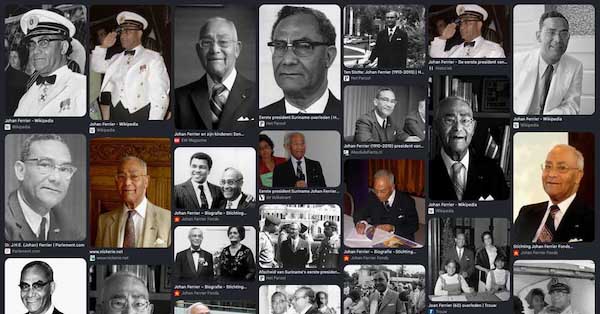
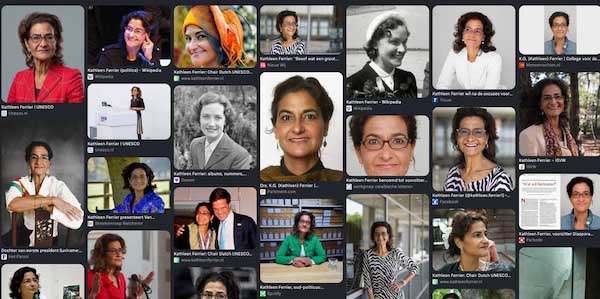
Johan was Suriname’s last governor and became its first president at independence in 1975. Kathleen served in the Dutch parliament between 2002 and 2012. A father becoming head of an independent state; a daughter helping shape political life in the Netherlands.
What stayed with me was how these histories met within one family. It opened up a question I wanted to explore through portraiture: How do we inherit a history while also taking part in shaping what comes next? And so I wrote it down in my journal for a later exploration……
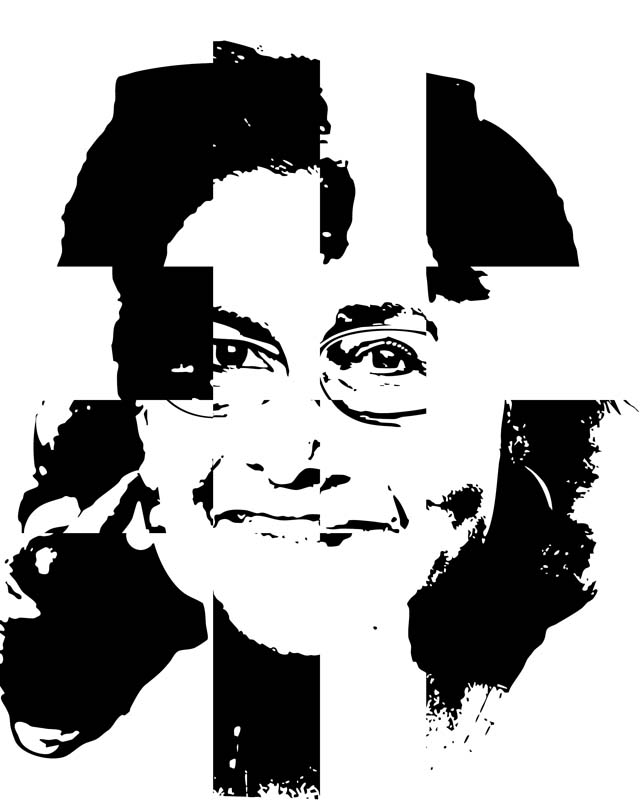
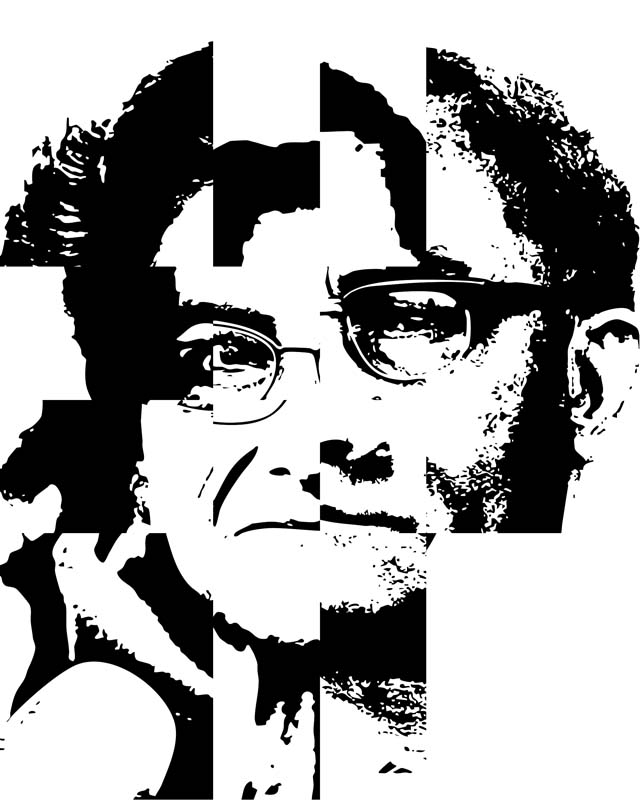
As autumn now arrives, we are now returning to the studio more after a long hot summer of exhibitions, talks and tours. I tell my self that ‘There is now room to play again with images, materials, and above all ideas.‘ Starting with photographs found through Google Images, we began bringing their faces together through a process we call Remix.
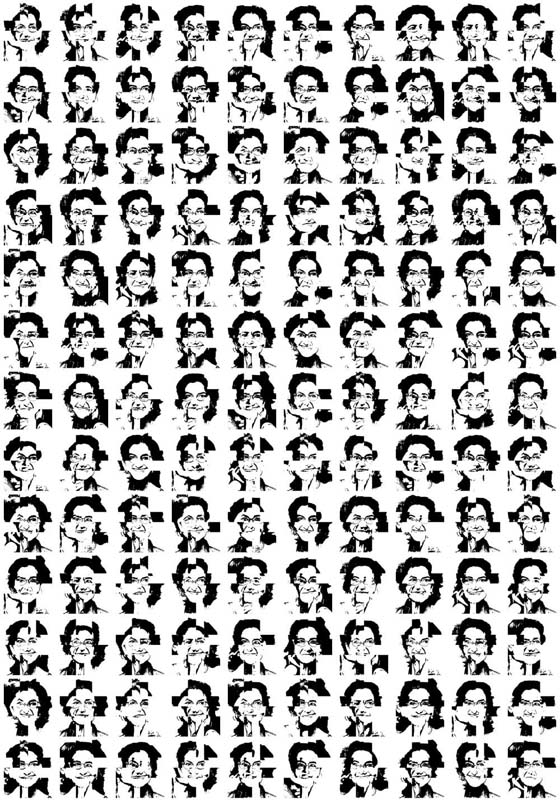
Features are fragmented, repeated and recombined. A face begins to emerge, but it becomes difficult to settle on a single identity, perspective or narrative. The process has become an established part of Lessons From Departure This particular story is still an early experiment.
Working with search results means that my starting point is an algorithmic output.
Before I begin, the possible direction of the work has already been influenced by what the search engine made visible. For much of the past decade, we have made our own photographs, choosing the moments, expressions and framing through direct encounters. Here, those choices belong to other photographers, and an algorithm helps determine which of their images I see. It is a return to a way of working we had largely left behind. I tell myself again “There is now room to play again with images, materials, and above all ideas.” – be patience and trust the process is then whispered under my breath.
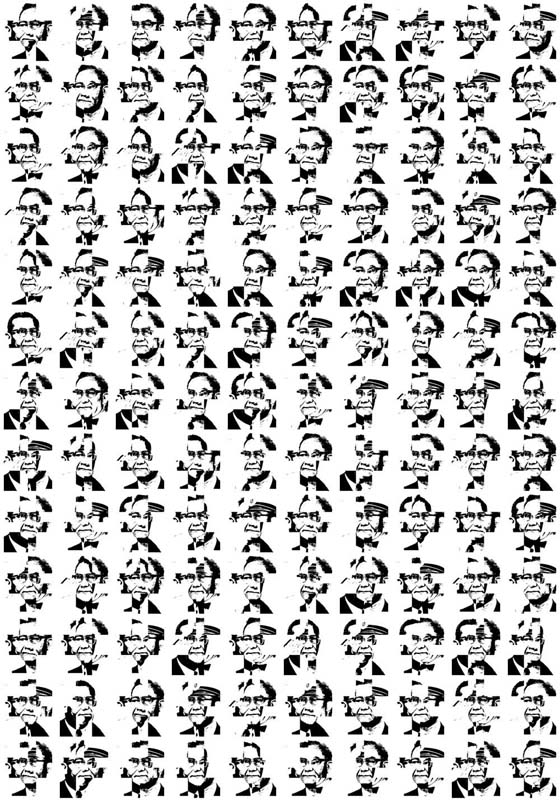
In the studio, as we work, play and explore, we begin to see what these combinations might hold: family resemblance, differences of age and gender, and the possibility of looking at two lives together across time.
I make a note in my journal to follow that last thought further. To move beyond Google and spend time with archives, family albums and people. To scan old photographs, rephotograph them through my own lens, and make new portraits through conversations across a community. I think of Think Richard Prince and his Coyboys and how rephotographing an existing image can change how we read it. Here, I am curious about what happens when we return to photographs with the people whose histories they hold.
Another connection emerged last night, when I learned that Kathleen had served on the independent committee overseeing research into the House of Orange-Nassau’s role in Dutch colonial history. Its findings were presented to King Willem-Alexander on 2 October 2026. A name underlined in my journal had led me from an exhibition in a neighbourhood library to a family story and into a wider conversation about how the Netherlands understands its past.
History shapes what we remember. How we interpret and share those memories shapes what future generations will understand. There is a responsibility in that, including in the images we make.
For much of this year, my project Lessons From Departure has been developing through conversations with people experiencing displacement, migration and the work of rebuilding their lives. My attention is now widening towards what happens across generations: how families, neighbourhoods and cities change, and how people become part of a place while changing it themselves.
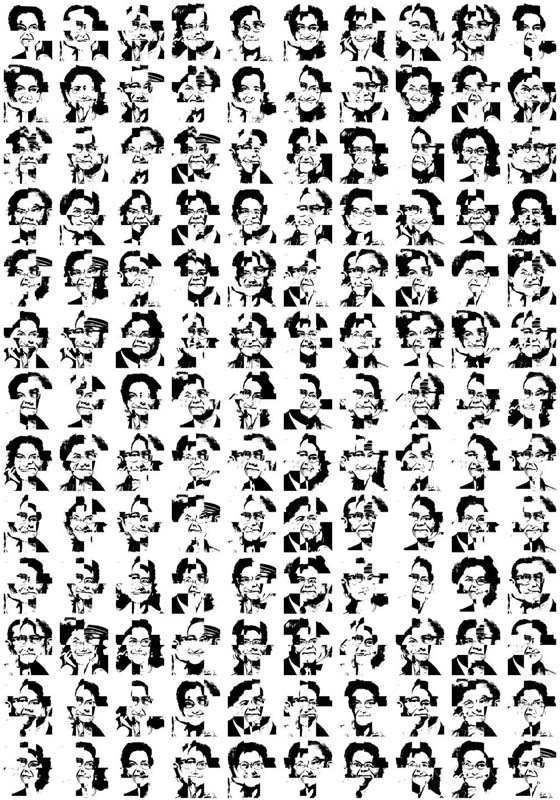
I keep returning to the single thought that culture is always being remixed. Through language, food, relationships, education, governance and everyday habits, we inherit and alter the world around us. Some changes grow through curiosity and exchange. Others are shaped by coercion and governance. Any honest portrait needs room for those differences.
For me, the connection between the Caribbean and Europe remains fundamental. Even after travelling through 135 countries, the Atlantic remains central to how I understand my own history.
Recent news from Barbados brought this closer to home. In September, Prime Minister Mia Mottley renewed her pledge to extend citizenship by descent to grandchildren and great-grandchildren of Barbadians abroad. The proposal raises a question that reaches beyond paperwork: how does belonging continue across generations born elsewhere?
Our earlier studies of the ageing Windrush generation in Britain approached related questions, although we had not explored them through Remix. As i sit. here, flicking though my note pad I can imagine returning to those questions through new portraits and recorded conversations, bringing family photographs and archival material from both sides of the Atlantic into the work.
Questions like What happens when a photograph made today meets an image of a grandparent or great-grandparent? What do we recognise? What has changed?
The Ferriers offer one starting point for this new direction of travel, more so as I sit here feeling stateless in my Amsterdam studio awaiing the arvial of my new passport.